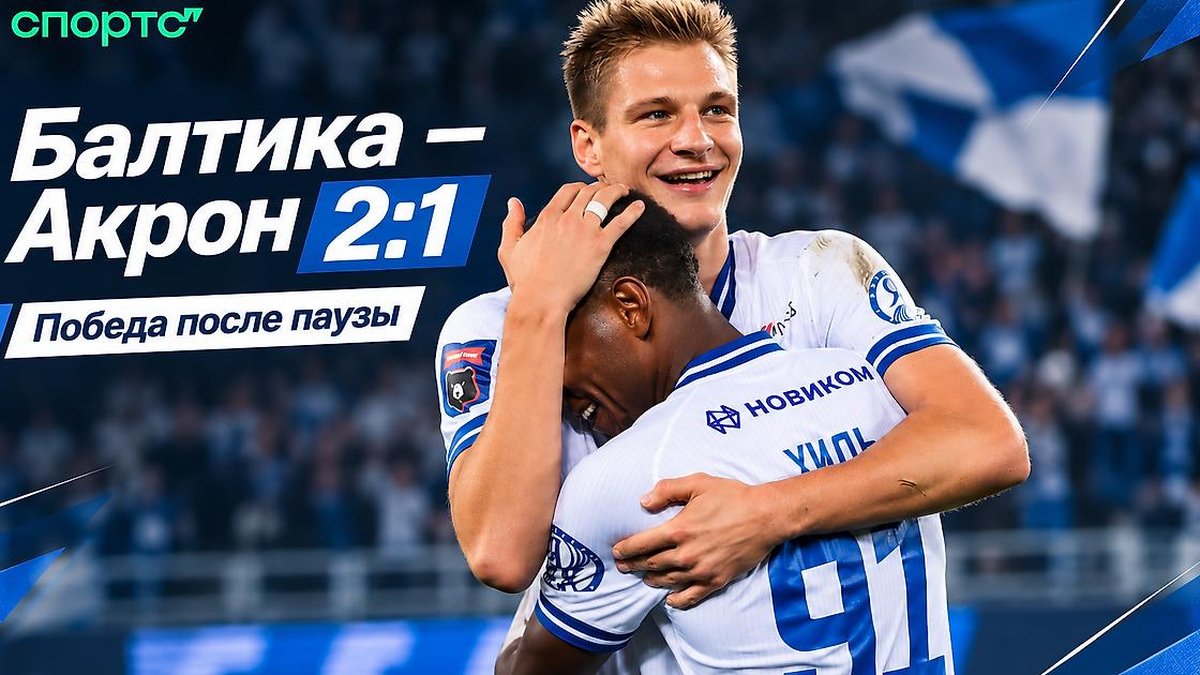
Six league games without a win. Almost two months of waiting. And finally, three points.
But the match against Akron was interesting for more than just goals from Gil and Belikov. After the final whistle, Andrey Talalaev explained several decisions that make us look at what happened on the pitch rather differently.
The first half: saving energy, not losing intensity
Before the break, Baltika looked unusual. The relentless high pressing that we have come to expect from the team was missing. Akron were able to keep the ball relatively comfortably, occasionally play through midfield and cause problems near Latyshonok's goal.
Watching from the stands, you might have thought the Kaliningrad side simply could not get their pressing to work.
But Talalaev explained afterwards that his players would not have had the energy to press at high intensity throughout both halves. They therefore planned to step up their efforts in the second.
That fundamentally changes how we should view the game.
The coaching staff had deliberately managed the workload instead of trying to win the entire match in the opening half-hour. Baltika were more restrained in the first half, preserving resources for the pressure they intended to apply later.
That does not mean everything before half-time was perfect. Akron created a dangerous chance when Pestriakov found himself almost in front of Latyshonok's goal. Baltika lacked precision too, with Gil failing to make the most of a good opportunity to open the scoring.
But it is now much easier to understand why the nature of the match changed so noticeably after the interval.
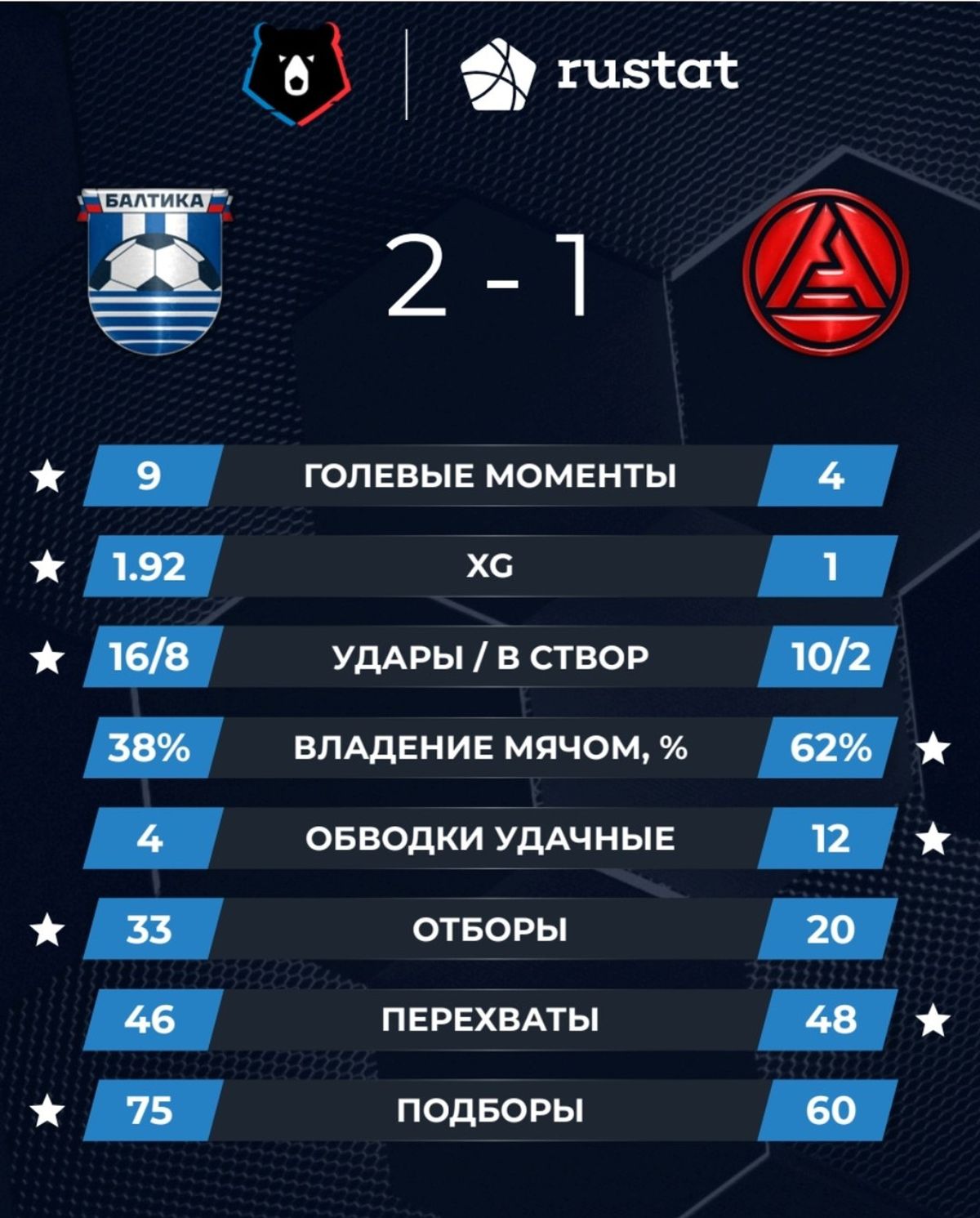
Baltika had five shots to the visitors' seven in the first half. The second half was a different story altogether: eleven shots to three.
That was not just a statistical coincidence. It was the result of managing the team's intensity.
Beveev: when the warning goes unheeded
Mingiyan Beveev's performance deserves a separate discussion.
After the match, Talalaev revealed that the defender might have been taken off as early as half-time. But his explanation of Akron's equaliser was even more revealing.
According to the coach, Beveev and his teammates had been warned before the match about Shumanskiy's tendencies. The Akron player likes to cut inside from the wing and look for an opportunity to shoot.
The player was reminded of that threat again immediately before the goal.
But the warning did not help.
In the 54th minute, Shumanskiy did exactly what the coaching staff had discussed: he moved inside and sent an accurate shot into the far corner.
What made it especially frustrating was that it came just two minutes after Gil had put Baltika ahead.
Of course, conceding a goal is rarely the fault of just one player. We can discuss how teammates were positioned, who should have provided cover and how the defensive line reacted as a whole.
But there is an important detail here. The danger was known in advance. In fact, the players' attention had been drawn to it again just before the incident.
And yet the opponent was still allowed to carry out his favourite move.
Perhaps that is why Beveev came off in the 61st minute. Talalaev had given him the chance to continue after the break, but things did not improve.
Moufi, who replaced him, became one of the best players in the match.
The substitutions that decided the result
At half-time, Talalaev brought on Belikov and Pospelov for Mendel and Maksim Petrov. Moufi followed later.
Those decisions shaped the rest of the encounter.
In the 52nd minute, Gil capitalised on Nedelcearu's mistake and opened the scoring. Two minutes later, Shumanskiy equalised. Baltika then continued to increase the pressure.
Moufi added an attacking threat down the right flank. His deliveries began causing regular problems for Gudiev.
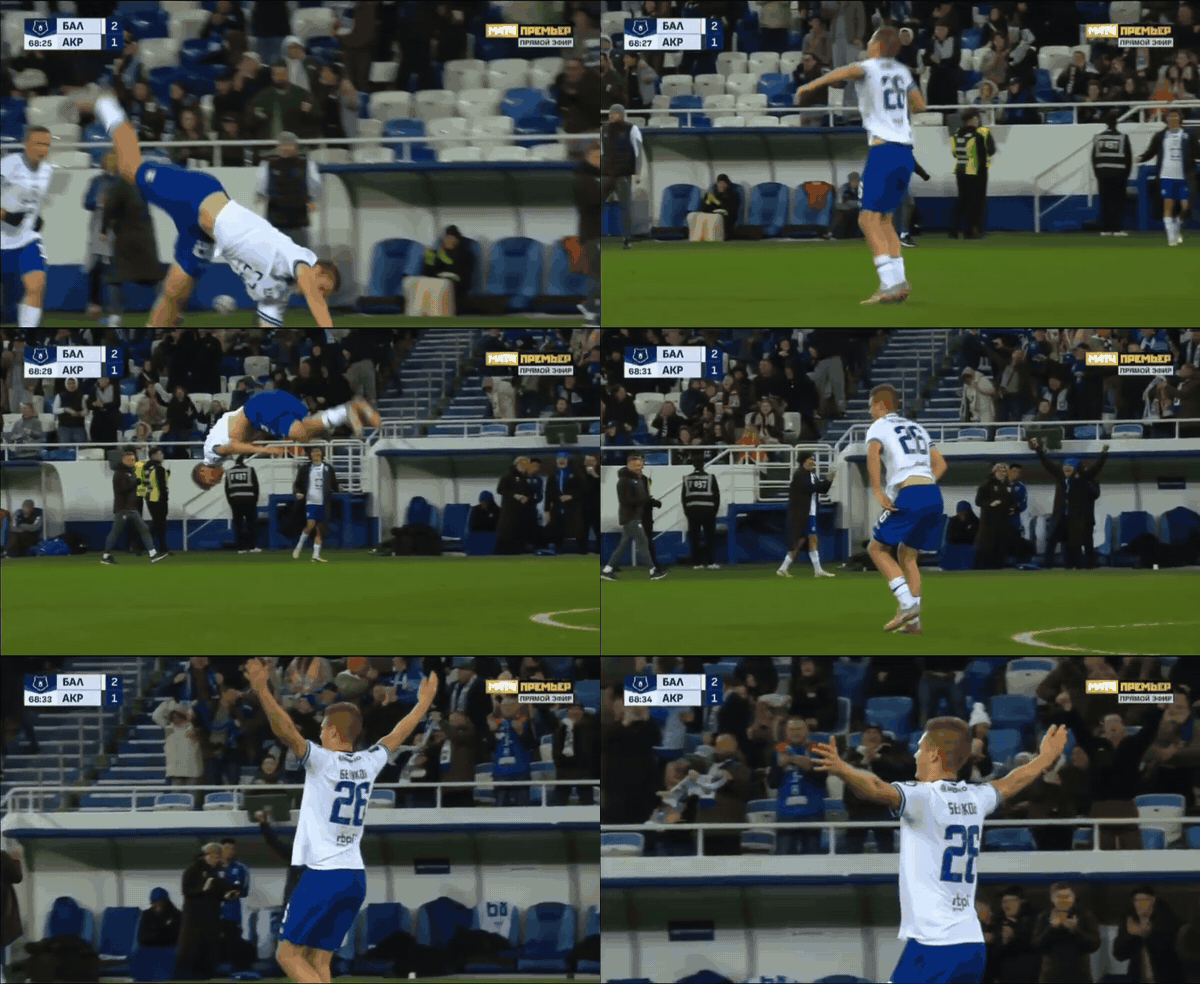
In the 68th minute, Gil headed towards goal from one of those crosses. The goalkeeper saved, but Baltika did not switch off. The attack continued, and Belikov scored the winning goal with a shot from outside the penalty area.
According to RuStat, Moufi delivered four accurate passes into the box out of four attempts and created three clear chances in his 32 minutes on the pitch.
Belikov, who had come on at half-time, did more than score the winner. He also brought energy and movement to the team.
The crucial point is that Baltika's coaching staff directly influenced the result through their in-game decisions.
Goalkeeper
Evgeny Latyshonok — 6.5
A composed performance without a huge workload. In the first half, he saved Baltika after Pestriakov had a dangerous effort from almost point-blank range. Akron managed only two shots on target in total, one of which ended in a goal. Latyshonok can hardly be blamed for the one he conceded. His distribution also deserves praise: eight accurate long passes from nine attempts.
Defenders
Mingiyan Beveev — 4.5
Baltika's weakest player in this match. All four of his attempted tackles failed, while RuStat recorded two major errors and one error leading to a goal. But the numbers are not even the most important part. Talalaev explained afterwards that Beveev could have been substituted at half-time. The defender had also been warned about Shumanskiy's habit of cutting inside from the wing, including a reminder immediately before the goal. Even so, Akron's attacker did exactly what the coaching staff had prepared for. Beveev was replaced in the 61st minute. Arguably his poorest performance in quite some time.
Eduardo Anderson — 5.5
An inconsistent display. He won nine of fourteen duels, made five interceptions and recovered eight loose balls. There is little to criticise about the volume of his defensive work, but RuStat recorded two major mistakes, which significantly affected the overall impression. He was not always secure when Akron built attacks. You want more consistency from a central defender.
Loris Mouyoukolo — 6.5
A good match. He won nine of fourteen duels and was especially effective in the air, winning five of his six aerial contests. All five of his progressive passes found their targets. Mouyoukolo was not heavily involved in possession, completing only fifteen passes. His main contribution was defensive. He generally played calmly, avoided unnecessary complications and helped Baltika steer clear of serious problems late in the match.
Nathan Gassama — 6.5
One of Baltika's most active defenders. He took two shots worth a combined 0.56 xG. That is an impressive figure for a defender, although chances like those should ideally be converted. He progressed the ball well too, completing eight of eleven progressive passes. Add nine loose-ball recoveries, three interceptions and three successful tackles. On the other hand, he won only four of ten aerial duels. A useful performance with good attacking involvement, but not faultless defensive reliability.
Eldar Civic — 7.0
Fascinating numbers. He won all twelve duels he contested and succeeded with all eight attempted tackles. Add seven interceptions and eleven loose-ball recoveries. Defensively, he was among the best players on the pitch. In possession, however, it was a different story: only 65% of his passes reached their targets, and just one of five progressive passes was successful. His high rating is primarily a reward for the huge amount of effective work he did without the ball.
Midfielders
Andrey Mendel — 5.5
Played only the opening 45 minutes. He recorded four interceptions, five recoveries and one shot on target. But he won only six of thirteen duels, and his passing accuracy was 65%. He was unable to make a substantial impact on Baltika's attacking play. At half-time, he made way for Belikov, who went on to score the winner.
Ilya Petrov — 6.0
Put in a considerable amount of work away from the spotlight: five interceptions, seven recoveries, two passes leading to shots and one clear chance created. His accuracy when passing into the penalty area was poor, though, with only two successes in eight attempts. He also struggled in duels, winning three of nine. He did not have a bad game, but he could not become the player who dictated Baltika's play through midfield.
Konstantin Shiltsov — 6.5
Worked hard and kept looking for ways to create danger. He made three key passes, created two clear chances and recorded seven interceptions and seven recoveries. Opponents fouled him four times. But there is another side to the figures: only eight wins from 24 duels, one successful dribble from four attempts and eleven turnovers. Shiltsov was not always efficient, but his initiative and involvement in chance creation justify a positive rating.
Maksim Petrov — 5.0
A disappointing 45 minutes. Just six passes, six turnovers and three duels won out of fourteen. His successful technical and tactical action rate was 46%. He did manage to create one clear chance, but it was not enough to change the overall impression. Maksim was barely involved in developing attacks, and replacing him at half-time looked like a logical decision.
Forward
Brian Gil — 7.5
Scored Baltika's first goal and was heavily involved in the move that eventually led to Belikov's winner. For his goal, he read Nedelcearu's mistake perfectly and made full use of the gift. But Brian could have scored more. In the first half, he missed the target from a good position, and after the break he failed to convert an excellent chance from Moufi's cross. He finished with three shots, two on target, and won just two of ten duels. Not a perfect display overall, but the striker delivered a decisive contribution.
Substitutes
Ivan Belikov — 8.0
One of the match's main heroes. He came on at half-time and scored the winner from a situation that was anything but certain: the shot had an xG value of just 0.14. Beyond the goal, Belikov brought energy, won six of nine duels and completed four of seven progressive passes. He gave the ball away just once in 48 minutes. An excellent substitute appearance and a thoroughly deserved high rating.
Vladislav Pospelov — 5.5
Came on after the break but was considerably less convincing than Belikov. Two key passes and two accurate passes into the penalty area show that he was trying to create danger. In physical contests, however, he struggled badly: just one duel won out of nine and no successful dribbles in three attempts. He contributed in individual moments but lacked consistency.
Fahd Moufi — 8.0
Perhaps the match's best player in terms of the impact he made on Baltika's overall play. He arrived in the 61st minute and almost immediately added attacking threat on the right. Four accurate passes into the penalty area out of four, two successful crosses out of two and three clear chances created. It was his delivery that started the attack which ended with Belikov's winner. Moufi also contributed defensively, winning nine of fifteen duels. An outstanding half-hour.
Egor Golenkov — 6.0
Created more opportunities to score in 21 minutes than some players managed in the whole match. Three shots, two on target and 0.55 xG. Several times he made excellent runs, found space and arrived in dangerous positions. But he did not convert any of those chances. The missed opportunities late in the match were particularly frustrating because they could have settled the result beyond doubt. His movement and ability to find chances deserve credit, but his finishing brings the rating down.
Mikhail Ryadno — 6.5
Played only nine minutes, so any rating must be treated with caution. Even in that brief spell, however, he managed a key pass, created a clear chance, won two duels and recovered three loose balls. He settled into the game well and helped Baltika finish the match on the front foot. It would be hard to ask for much more in such little time.
A victory built on calculation
Baltika did not play perfect football. There were mistakes, lost duels, misplaced passes and several wasted scoring opportunities.
But Talalaev's plan is now much easier to understand.
Manage the team's energy, keep something in reserve for the second half, change the lineup at the right moments and use the resulting advantage in intensity.
Not everything worked. There were problems in defence in particular.
Yet it was in the second half that Baltika established the decisive advantage.
Perhaps that matters even more than the familiar approach of charging at an opponent from the opening whistle and trying to overwhelm them with sheer energy.
Today, Baltika won not just through character, but by managing the game.
And after six matches without a victory, that feels especially valuable.


